We are committed to security and compliance of the software we develop, and all of our work with our customers & their data
Greenstep is ISO27001 certified, and compliant with GDPR, NIS2, Anti Money Laundering and KYC EU-laws. We are audited by local Financial Management Associations in Finland (Taloushallintoliitto), Sweden (SRF), Norway (Finanstilsynet) and are a member of Estonian Accountants Association (Eesti Raamatupidataje Kogu).
We are also a certified advisor in the Nasdaq Helsinki Stock Exchange and a member of the Finnish Venture Capital Association. On behalf of our clients, we also report to FIN-FSA (Financial Supervisory Authority in Finland) and EVCA (European Venture Capital Association).
Security is at the core of everything we do, and we also work towards better regulation and processes in the accounting field as active members in the Finnish National Emergency Supply Agencys Financial Administration steering group.

Read more about Compliance and Security at Greenstep

Our Internal tools are compliant, developed with security as a top priority, and rigorously tested
NetSuite
Project creation, task management, time tracking (External & Internal), project invoicing, Self-billing, HR features. Financial & Consolidated reporting, Parent Company Financials, Subsidiary Financials, Master Data Management, Sales Invoicing & Purchase Data Management. We develop our own tools and processes on top of NetSuite.
BI Book
Review Power BI dashboards for Management reporting, KPIs, APMs, Budgeting, Forecasting and People Analytics.
Bezala
Expense reporting compliant to the local legislation of 20+ countries.
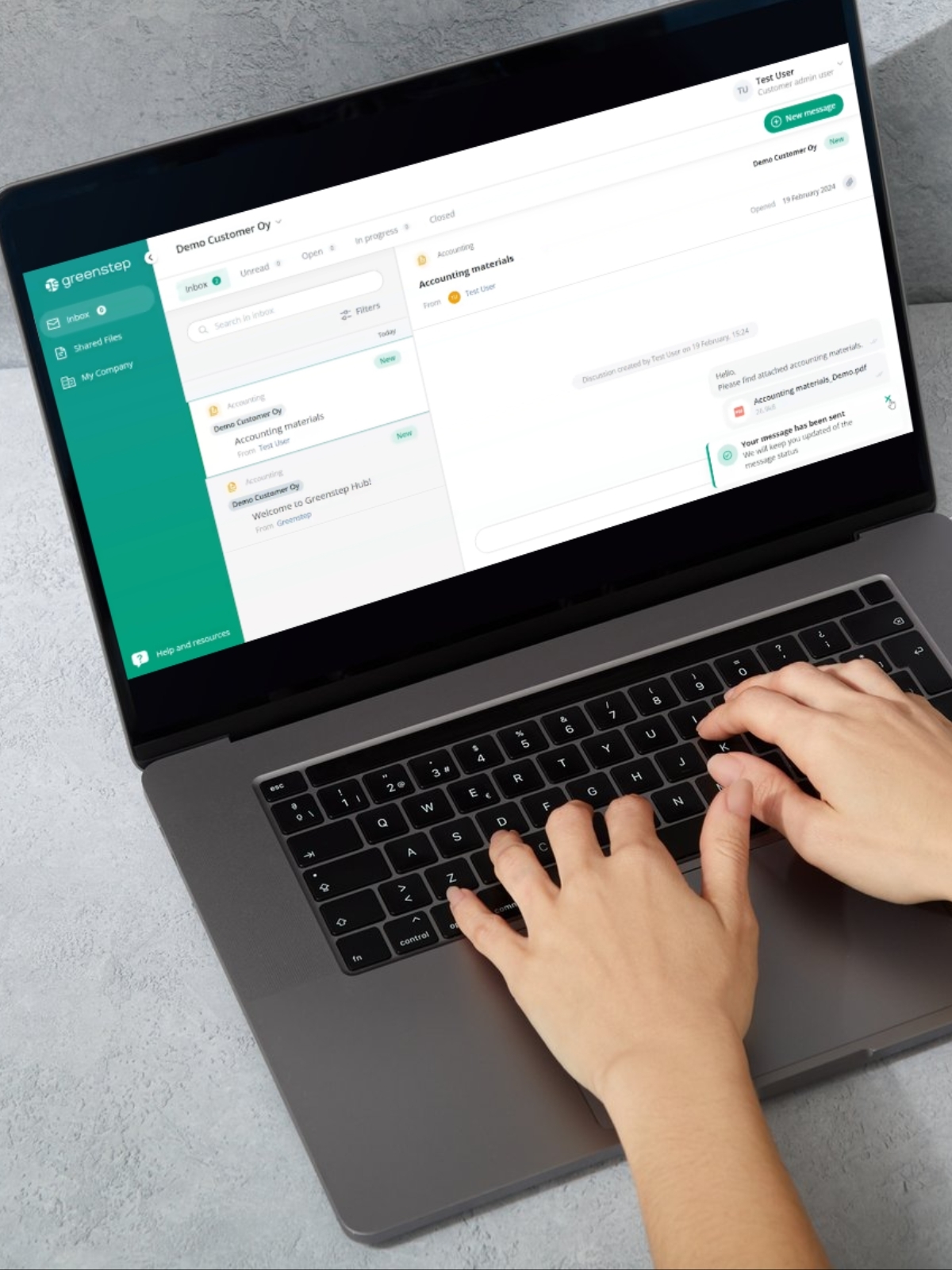
Secure Communication through Greenstep Hub
The GS HUB is a platform for secure client communication, file sharing and automation built from the ground up by Greenstep. Key Security features:
- SSO is enforced for all users
- Administrator access is strictly controlled and fully logged
- All cloud service providers are ISO27001 certified
- Data is continuously backed up
- Data is always within the EU and according to GDPR demands.
Other Noteworthy Compliance & Security Efforts and Achievements
Greenstep Actively participates in Oracles On-Line Presence Security program
Oracle has fixed 112 vulnerabilities reported through their On-Line Presence Security program so far this year. 14 of those were reported by Greensteps team members, making us by far the greatest contributor, reporting 12,5% of the total vulnerabilities in 2023. On top of that we also found 3 vulnerabilities last year.
Greenstep is an active member of the National Emergency Supply Agency in Finland

In addition to assuring our own safety, we also work actively towards improving the safety of our entire business field, including that of our competitors. We are an active member in the Finnish National Emergency Supply Agency (Huoltovarmuuskeskus), ensuring that payroll and accounting services will be provided even in uncertain times. Payroll and accounting are regarded as critical processes that must survive any uncertain times. We help ensure that people and business get paid no matter what.
Over 4000 automation tests
Multiple of our development teams have a test-driven-development approach, meaning that tests are written before the development work is started. This has resulted in us having over 4000 automation tests, ensuring that the software we develop works even after new features are tested & released.
Questions about security & Compliance at Greenstep?
Our Compliance and Security teams will more than gladly answer your questions. Start by reaching out to Anne Kulla on the right side.

Choose Greenstep as your partner
At Greenstep, your business will be in secure and compliant hands. We work according to our shared values. Our values include the desire of delighting the customer, the will to renew and develop, the enthusiasm to produce and to achieve success together, and honesty and appreciation of other people.